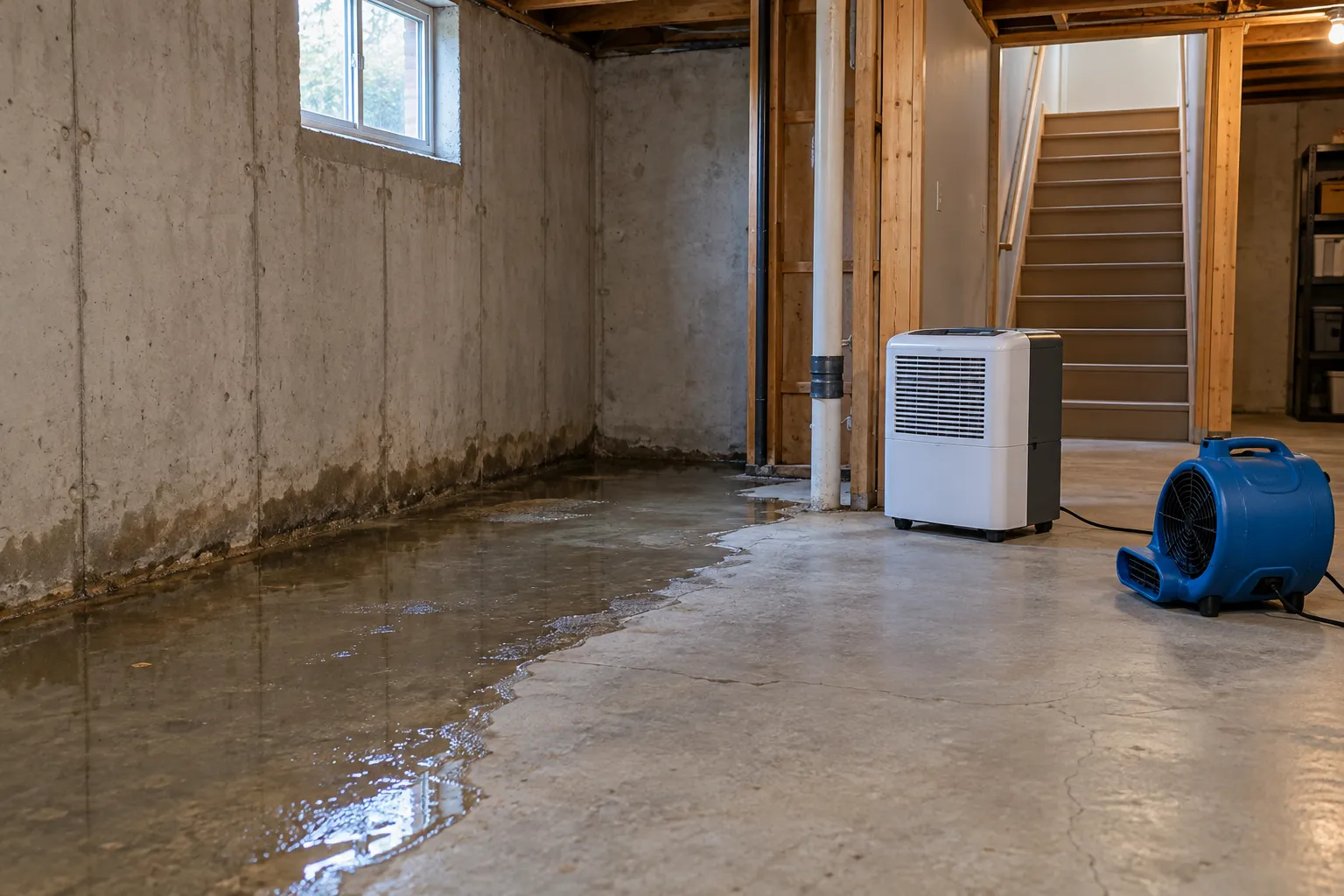
Water on a basement floor can hide more than wet boxes. It may reach wires, soak wall edges, or carry waste from a drain. Stay out until the hazards have been checked. From a dry spot, note where the water sits and whether it is still rising. Those details help a local provider understand your request.
Possiblygrey Restoration is a referral service for homeowners in Pensacola and the Pensacola Bay area. We connect requests with independent providers in our network. The provider checks the basement, explains what needs attention, and sets the price and schedule. Cleanup may involve water extraction, which means removing pooled water, followed by drying and checks for trapped moisture. Ask for a written scope before work begins so you know what the proposed work includes.
Keep your feet out of the water
A shallow puddle can reach a power cord, outlet, or appliance. Do not enter a flooded basement to check the depth. Keep children and pets away from the stairs. If you see sparks, smell gas, or suspect a damaged structure, leave the home and contact emergency services from a safe place.
Check availability from a dry place
Request a callback to check provider availability for flooded basement cleanup. Describe what you can see without entering the water. Mention any drain backup, active leak, or wet electrical equipment. Possiblygrey Restoration connects requests with independent providers in our network. The provider confirms whether they can take the job and when they can attend.
Describe the change you noticed
Start with signs you can explain in plain words. Is the floor wet near one wall? Has a brown mark grown since yesterday? Does the stairwell smell damp? Note when you first saw the change. Take photos from a dry, safe spot if possible. You do not need to know the cause before requesting help.
Look for clues without touching anything
Water near a pipe may point to a plumbing leak. Water along a wall after rain may suggest an entry point outside. A drain overflow may involve waste. These are clues, rather than a firm diagnosis. Tell the provider about recent storms, plumbing trouble, or past damp patches so they can narrow the search.
Do not rush to pump it out
Deep floodwater needs an assessment before removal. Water outside the basement may still press against the walls. Removing indoor water too quickly can create a dangerous pressure difference. Do not rent a pump and start draining a deeply flooded space on your own. Ask the provider how they will assess safe water removal.
Treat unknown water with care
Clear water can still contain harmful material. Floodwater and drain backups may carry waste, dirt, or chemicals. Avoid touching wet items until the provider has assessed the water source. Tell them if anyone has already walked through the area. Keep shoes and other items that touched the water away from dry living spaces.
Ask how pooled water gets removed
Water extraction means taking standing water out with pumps or suction tools. The provider chooses equipment based on depth, access, and the water source. Ask where the removed water will go. Tight stairs, a narrow doorway, or limited outdoor access may affect the setup. Explain those limits when discussing the visit and written scope.
Check beneath the dry looking surface
An exposed floor may feel dry while nearby materials remain wet. Moisture can sit behind trim, under flooring, or inside a wall. A provider may use a moisture meter, a tool that checks for damp material. Ask which areas they plan to test and how those readings will guide decisions about drying or removal.
Know what structural drying means
Structural drying means drying the parts of the building that got wet. That may include framing, wall bases, and floor layers. Air movers push air across surfaces. Dehumidifiers pull moisture from the air. The provider should explain the setup and check progress. A dry surface alone does not show whether hidden layers are ready to close.
Separate finished rooms from bare spaces
A finished basement has more layers that can hold water. Carpet padding, wallboard, cabinets, and insulation may need close checks. A bare concrete room has fewer layers, but cracks, stored items, and wood supports can still hold moisture. Ask the provider to explain what can stay and why any material needs to come out.
Sort belongings after the safety check
Make a list of wet belongings before moving or discarding them, if safe. Photos can help record their condition. Paper boxes, padded furniture, and stored fabrics may need different decisions from hard items. Ask about cleaning limits and separate charges. Do not move damp items upstairs without guidance, where they may wet other surfaces.
Watch for dampness after storms
Basements are less common among the area's slab homes, but below ground rooms still need care. Frequent summer storms and high humidity can make damp patches harder to dry. Once the space is safe, watch for new staining after rain. Share repeat patterns with the provider so cleanup and the water entry problem receive separate attention.
Review the written plan before work
Ask what the estimate includes: water removal, drying equipment, checks, material removal, hauling, or cleaning. Find out how equipment use is priced and how extra work is approved. Some policies may cover sudden damage; check your policy. Providers can often help document damage for a claim, but your insurer decides what the policy covers.
Ask what shows the basement is dry
Before replacing flooring or closing walls, ask for the provider's final moisture findings. Find out which spots were checked and whether any areas remain damp. Ask what needs repair to address the source. Keep the scope, photos, readings, and invoices together. A lingering smell or returning stain deserves another check rather than a fresh coat of paint.
Send the details you have
Use the request form if you prefer to describe the problem in writing. Include where the water sits, when it appeared, and any access limits. Possiblygrey Restoration makes the connection; the provider assesses the basement and explains the proposed work. Ask about availability first, then review the scope and written quote before deciding how to proceed.
What's Included
Standing Water Removal Assessment
The provider checks water depth, possible hazards, and access before planning removal equipment.
Hidden Damp Spot Checks
Moisture checks help the provider find wet areas beneath floors and behind walls.
Basement Drying Setup
The provider selects drying equipment based on wet materials, room conditions, and available access.
Cleanup Scope
A written scope explains proposed tasks, material decisions, equipment charges, and exclusions.
What Might Basement Cleanup Work Cost?
These broad typical U.S. ranges vary by water source, basement size, access, and wet materials. Tasks may overlap. Ask the provider for a written quote based on your specific job.
| Item | Typical U.S. range | Notes |
|---|---|---|
| Standing water extraction | $500 – $3,000 | Depth, volume, and safe access affect the scope. |
| Structural drying | $1,000 – $5,000 | Wet materials and equipment use affect the total. |
| Contaminated water cleanup | $2,000 – $8,000 | Waste, affected area, and disposal needs vary. |
| Wet carpet and padding removal | $200 – $1,500 | Area, access, and hauling affect the quote. |
| Wet wallboard and insulation removal | $500 – $3,000 | Removal area and disposal affect pricing. |
| Basement finish repairs | $1,000 – $10,000 | Separate repair work may follow cleanup and drying. |
How It Works
Share Your Signs
Describe the water, when it appeared, and any hazards visible from a dry, safe spot.
Connect With A Local Provider
Possiblygrey Restoration refers your request to an independent provider who can discuss availability.
Review The Proposed Scope
The provider assesses conditions and explains suggested work, charges, and any access needs.
Confirm The Drying Findings
Ask the provider which moisture checks support finishing cleanup and starting repairs.
Why Call Possiblygrey Restoration
Start With Visible Signs
Describe the wet patch or new smell without having to diagnose the cause.
Clear Roles
Possiblygrey Restoration handles the referral; the independent provider assesses damage, proposes work, and sets prices.
Plain Explanations
Learn what cleanup terms mean so you can ask useful questions before work.
Informed Decisions
Ask about scope, wet materials, and charges before agreeing to the provider's proposed work.
Other Services
Need flooded basement cleanup in Pensacola?
Found a wet patch or a new damp smell? Request a callback to check provider availability, or use the form to request an estimate.
No obligationFlooded Basement Cleanup FAQ
Who should I contact for emergency water damage repair in a flooded basement?
For emergency water damage repair, describe the basement flooding through Possiblygrey Restoration to check local provider availability. We are a referral service. The independent provider assesses the job and sets the schedule. If you suspect electrical danger, gas, or structural damage, leave and contact emergency services.
Can I use a household vacuum to remove basement floodwater?
Do not use a household vacuum on standing water. Electrical hazards and possible contamination need assessment first. Stay out of the flooded area and ask a local provider what removal method suits the water source and conditions.
Does flooded basement cleanup include fixing the leak?
Not necessarily. Cleanup, drying, and fixing the water source may be separate tasks. Ask the provider what their written scope includes and whether another trade is needed before walls or flooring are replaced.
Tell us what happened
Found a wet patch or a new damp smell? Request a callback to check provider availability, or use the form to request an estimate.
No obligation