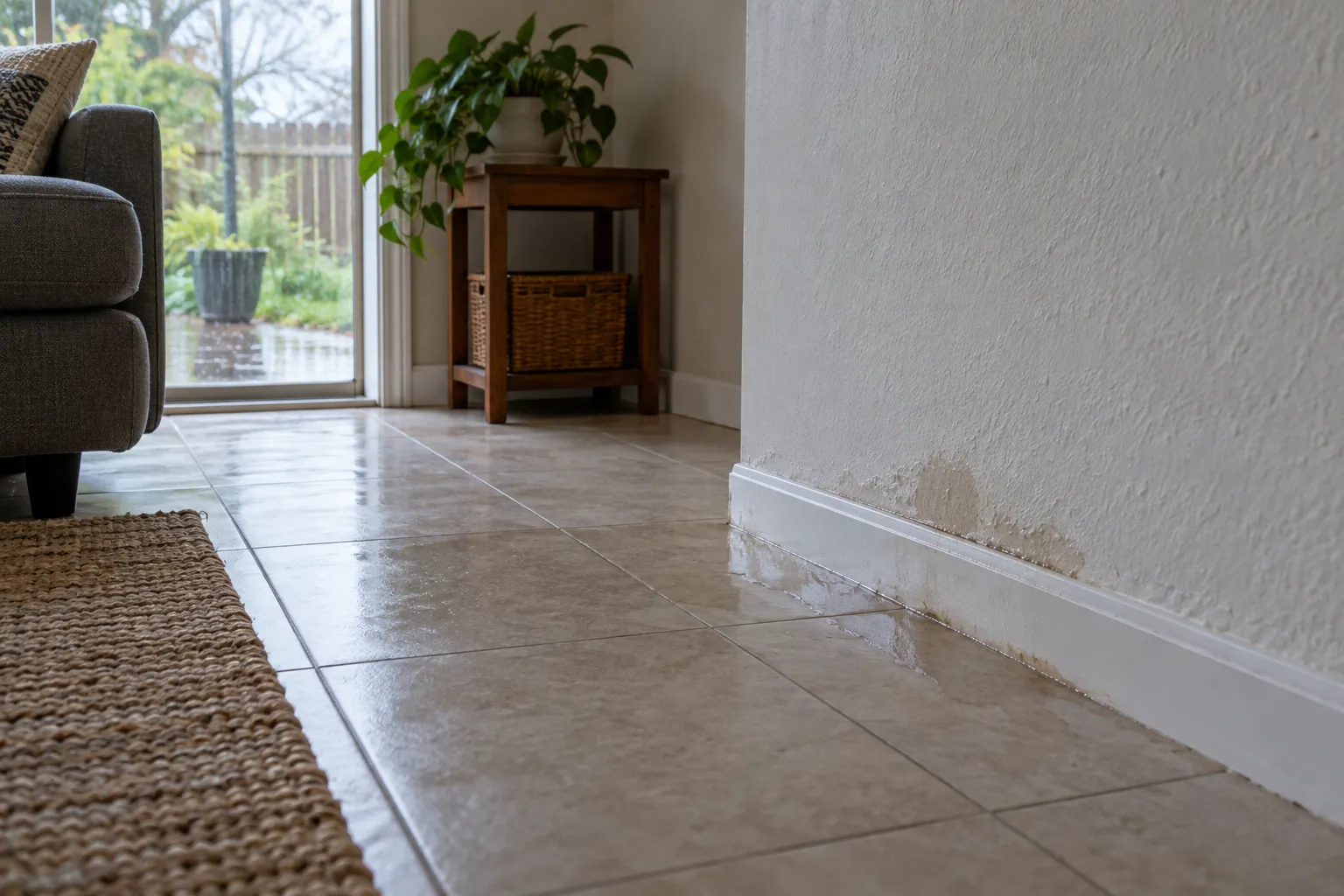
What should I do about water damage?
What people ask us
What are the first signs of water damage?
Look for a new ceiling stain, paint that lifts, or a floor edge that swells. A damp smell can be another clue, even when you see no water. Take a photo and note when the change began. Avoid touching soft or sagging areas. A local provider can check the source and explain whether water has reached nearby walls or floors.
How can I help prevent water damage during storm season?
Check for new stains after heavy rain. Keep visible drain openings clear when you can reach them safely from the ground. Look under sinks and near appliances for drips. In humid weather, notice damp spots that linger. Ask a suitable provider about roof or drainage concerns. Small checks can reveal trouble, though they cannot rule out leaks hidden inside a wall.
Can I clean up water damage myself?
A small spill on a hard surface may be simple to wipe up if the source is known and the area is safe. Stop if water has reached walls, soaked flooring, or come from a dirty source. Keep away from wet electrical items. A local provider can assess hidden moisture and explain where home cleanup reaches its limits before you start.
What is the difference between water extraction and structural drying?
Water extraction means taking out standing water. Structural drying means drying wet parts of the home, such as walls and floors. A surface can feel dry while moisture remains underneath. The provider may use tools to check those hidden areas. Ask how the provider will track drying and decide when equipment can come out. Removing visible water may be only the first step.
What should I expect when a water damage provider visits?
The provider may ask when you first saw the problem and whether the water source has stopped. They may check nearby rooms and measure moisture in materials. Ask for the findings in plain words. Before work starts, request a written scope and quote. Possiblygrey Restoration makes the referral; the provider handles the inspection, work details, price, and schedule directly with you.
How do I choose a water damage restoration provider?
Ask what the inspection includes and who will do the work. Request proof of any license or insurance that applies to the job. Get a written quote with equipment charges and possible extra costs. Ask what stays and what may need removal. Compare clear scopes, since two prices may cover different work. Choose only when you understand the proposed steps.
Do I need flooded basement cleanup if the water is gone?
Water can leave wet walls, stored items, and floor layers behind after a basement drains. A damp smell or a new stain is worth checking. Flooded basement cleanup may include water extraction and drying, depending on what the provider finds. Many homes here have slabs instead of basements. Tell the provider which space got wet so the assessment fits your home.
How do I find emergency water damage repair through this site?
Request a callback to check provider availability. Describe the new damage, the rooms affected, and whether water is still entering. You can also use the request form. Possiblygrey Restoration connects homeowners with independent providers in our network for emergency water damage repair needs. Availability varies. The provider confirms whether they can take the job and discusses the next steps, timing, and charges with you.
Tell us what happened
Found a wet patch or a new damp smell? Request a callback to check provider availability, or use the form to request an estimate.
No obligation